

Produce the Body: A History of Habeas Corpus
William Blackstone referred to it as the second Magna Carta. Chief Justice John Marshall called it the “great writ.” It has been part of Anglo-American common law since the Middle Ages. What we

William Blackstone referred to it as the second Magna Carta. Chief Justice John Marshall called it the “great writ.” It has been part of Anglo-American common law since the Middle Ages. What we
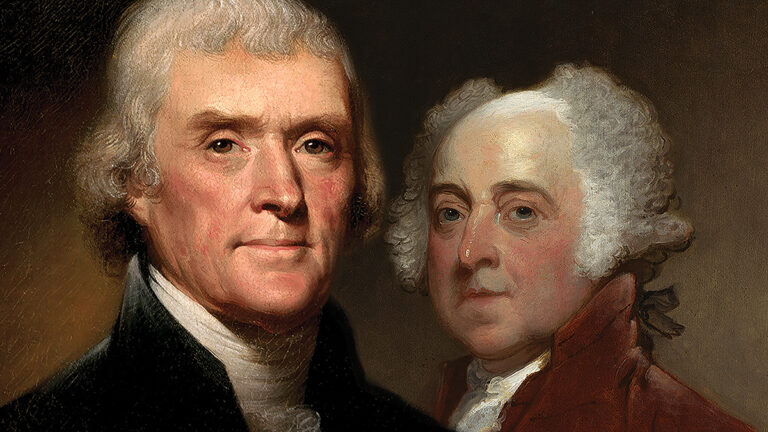
The presidential contest between an embattled incumbent seeking reelection in a bitterly divided country and his well-known challenger dominated the national spotlight. The hard-fought campaign featured vicious attacks in partisan

Teaching American History is proud to introduce our latest volume, From Bullets to Ballots: The Election of 1800 and the First Peaceful Transfer of Political Power Now available in our

40 years ago, on June 30, 1982, the Equal Rights Amendment (ERA) fell 3 states short of ratification. To remember that event, we are re-running a blog that details the

Article VII of the 1787 U. S. Constitution stated that once nine states had ratified, it would become “sufficient for the establishment of this Constitution between the states so ratifying

Some of my favorite teaching opportunities are when I get to teach the history behind American holidays. Frequently (usually after the third or fourth holiday lesson) I get the slightly

What are our staff and faculty reading this summer? Michelle Hubenschmidt, Teacher Program Manager For your summer reading pleasure I’d like to recommend two easy and light narratives based on

In the 1857 case Dred Scott v. Sandford, the United States Supreme Court argued that under the Constitution and laws of the country, “the Negro … had no rights that the

Last week we spoke with Professor Joshua Dunn about a recently published document collection he edited, The Judiciary. Dunn commented on the Supreme Court’s evolving understanding of its role in our constitutional

This post originally ran on May 23, 2019 Did you know that the origins of Memorial Day and its remembrance of America’s servicemen and women arose in response to the