

How Women Won the Right to Vote
Whenever I begin classroom conversations about women’s suffrage, I always play a “man on the street” clip in which a reporter stands on a busy sidewalk, asking college students and

Whenever I begin classroom conversations about women’s suffrage, I always play a “man on the street” clip in which a reporter stands on a busy sidewalk, asking college students and

The United States commemorates military service members in different ways, on three separate days each year, two of which are formally recognized as national holidays and widely celebrated. The history

“The words ‘All men are created equal’ have caused more consternation than any other words in our history,” says Skip L’Heureux, who teaches US history and government at Boothbay Region
The images flickering across my television screen seemed too good to be true. It felt like I was watching my favorite college football team win a game that had been

Teaching American History announces a new volume in its Core Document series, American Foreign Policy to 1899, edited by Stephen F. Knott. The volume covers the key events of its period, including the

The current obsession on race in politics and society demands that we reexamine the 1896 Supreme Court dissent that took most seriously the notion of a “colorblind constitution.” Its

“One trillion dollars of debt—if we as a nation needed a warning, let that be it.” With these words, President Ronald Reagan described the ominous trillion-dollar milestone that the United
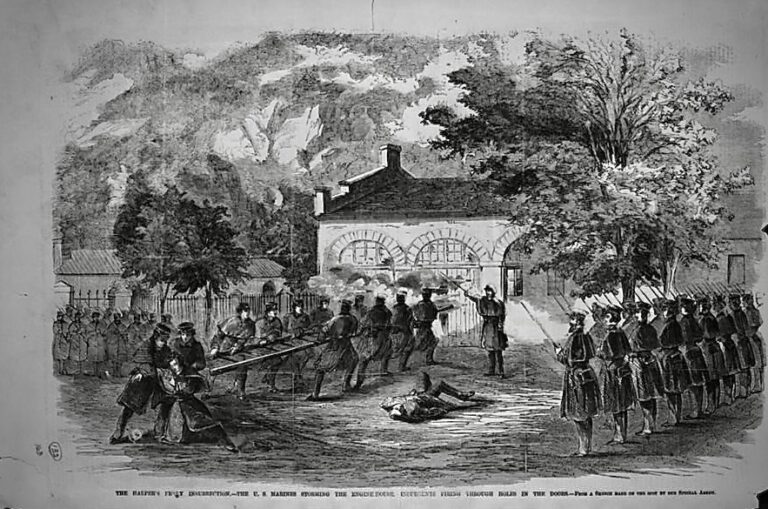
In the eighteen months since Covid turned the world outside in, I wrote two blog posts on John Brown, his actions in Kansas, and the raid on Harpers Ferry. One

Did you celebrate Columbus Day or Indigenous Peoples’ Day? The two holidays have a lot in common. Columbus Day was first proclaimed by president Benjamin Harrison on July 1, 1892.

In 1946, Robert Penn Warren (1905–1989) published All the King’s Men. The novel won the Pulitzer prize in 1947, has been twice made into a movie, and has been continuously in