
Committed to War: The First Battle of Bull Run
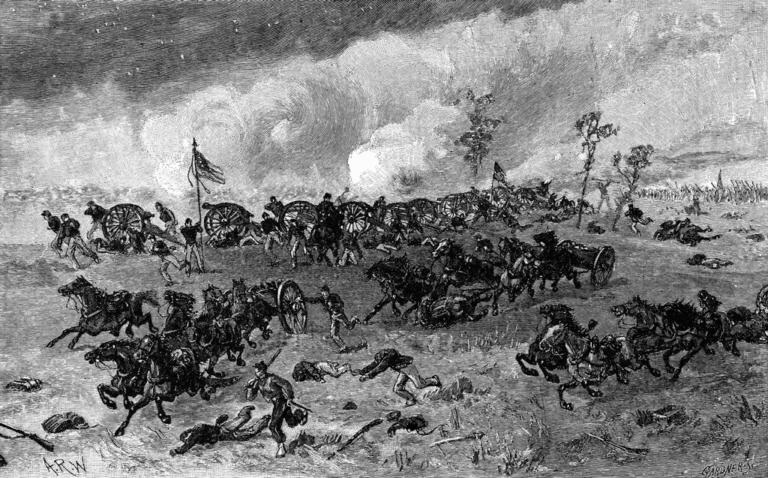
Although Union and Confederate forces had traded shots in some small skirmishes after Abraham Lincoln’s inauguration in March and engaged in a more serious fight over Ft. Sumter in April

Although Union and Confederate forces had traded shots in some small skirmishes after Abraham Lincoln’s inauguration in March and engaged in a more serious fight over Ft. Sumter in April

Almost every American can close their eyes and picture the scene. A small ship arrives off the coast of North America. Hearty pilgrims, armed with a covenant to follow all

Angus McDougall, a teacher from Hiram, Ohio, enrolled in the Master of Arts in American History and Government (MAHG) program for many of the same reasons other teachers do. He

Among speeches denouncing slavery, perhaps the most effective ever delivered is Frederick Douglass’s “What to the Slave is the Fourth of July?” Douglass proposed to answer this charged question on

Less than a week before he left office, President Eisenhower delivered his final speech to the American public, a speech that would come to be known as his Farewell Address.

South Carolina became the first state to secede from the Union when a convention in Charleston approved an Ordinance of Secession in December of 1860. Few Americans, during that tumultuous
The hour was late when Frederick Douglass rose to speak to more than fifty African-American leaders who had gathered in Washington, DC, to honor him and celebrate emancipation. The elaborate

At Teaching American History, we focus on telling America’s story through historical documents because history functions for a nation as memory does for an individual. Without memory, an individual or

Looking for thematic primary sources for your classroom? Teaching American History can help! We’ve developed the two-volume Documents and Debates Collection to illustrate the issues at stake in some of the

On July 4, 2020, the 244th anniversary of the Declaration of Independence, a new volume in Ashbrook’s Core Document Collections will appear: The American Revolution. Robert McDonald, Professor of History