
An American Story
It took some time to earn an M.A. in English. Forty-five years, maybe – if you’ll accept that my education started as a dream, of my dad, well before I

It took some time to earn an M.A. in English. Forty-five years, maybe – if you’ll accept that my education started as a dream, of my dad, well before I
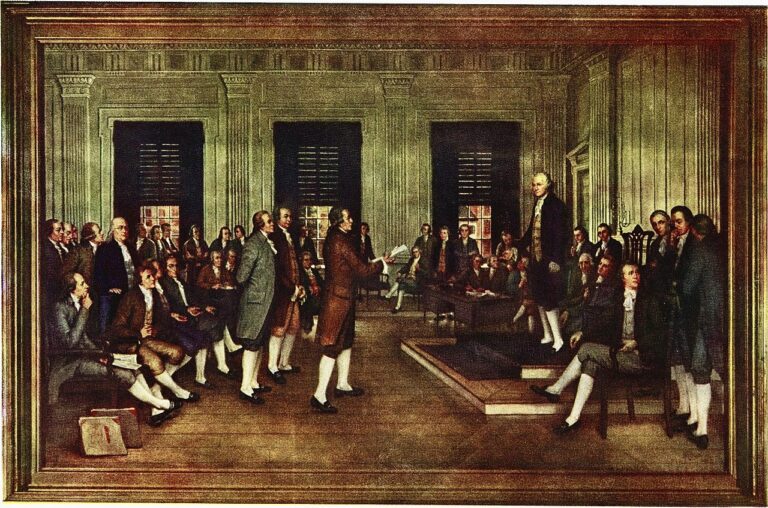
In Committee of the Whole, — The ninth Resolution being resumed, — The latter part of the clause relating to the jurisdiction of the national tribunals, was struck out, nem. con.; in order to
Mr. PATTERSON observed to the Convention, that it was the wish of several Deputations, particularly that of New Jersey, that further time might be allowed them to contemplate the plan
In Convention, —Mr. PATTERSON laid before the Convention the plan which he said several of the Deputations wished to be substituted in place of that proposed by Mr. RANDOLPH. After some
In Committee of the Whole, on the Resolutions proposed by Mr. PATTERSON and Mr. RANDOLPH, —Mr. LANSING called for the reading of the first Resolution of each plan, which he considered
On June 18th, Hamilton’s plan was the focus of the day. The House adjourned shortly after Hamilton concluded his presentation.
In Committee of the Whole, on the propositions of Mr. PATTERSON, — The substitute offered yesterday by Mr. DICKINSON being rejected by a vote now taken on it, — Connecticut, New
On June 20th, John Lansing of New York (1754–1829) argued that the Convention needed to answer what he called the “true question:” should they maintain the current structure under the Articles of Confederation, or create a new government?
On June 21st, Alexander Hamilton of New York (1757–1804) introduced his plan, arguing that the current plans were insufficient to ensure a “good government.”
On June 22nd, delegates rejected two motions: one allowing the lower house to determine its own salary, and the other removing the national treasury as the source of legislators’ pay. They also set the minimum age for serving in the lower house at 25.