

Constitutional Convention
What took place during the summer of 1787 is still considered extraordinary…but how did the delegates actually tackle and respond to the problems facing them to secure ‘the blessings of […]

What took place during the summer of 1787 is still considered extraordinary…but how did the delegates actually tackle and respond to the problems facing them to secure ‘the blessings of […]

In creating what James Madison referred to as a “compound republic,” the framers of the U.S. Constitution established a political system that was bound to generate collisions between state and federal governments. This seminar will analyze disputes about the extent of federal and state authority throughout American History, beginning with the Federalists and anti-Federalists ratification […]
Abraham Lincoln and Martin Luther King, Jr. both argued that the proper foundation for civic education is the belief that America has a moral essence derived from the principles of the Declaration of Independence, and that America’s history and purpose—its past, present, and future—is the story of our struggle to live up to those principles. […]

The global Seven Years’ War (known in America as the French and Indian War) caused Britain, France, and their allies to clash from 1754 to 1763. Although important in its own right, perhaps it is even more significant in that it reordered the world in ways that would prove consequential beyond anyone’s expectations. In colonial […]

Beginning with the upheavals of the 1960s, the United States saw a diverse set of groups pushing for social change. These included African Americans, Native Americans, women, and gays and lesbians. This seminar will focus on the legacy of the 1960s, the intersection of personal behavior with political movements and battles won and lost by […]
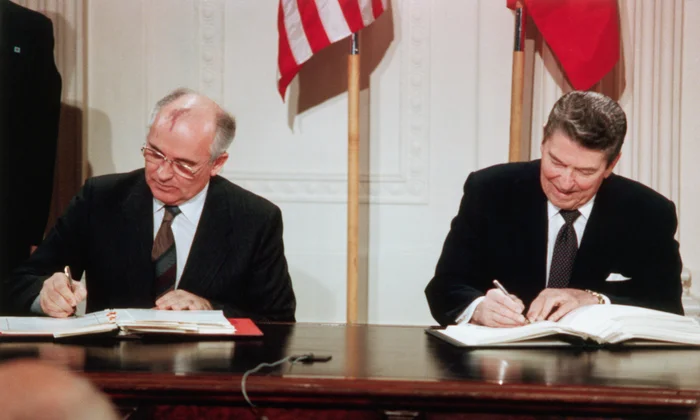
As detente between the United States and the Soviet Union collapsed in the late 1970s, the prospect of superpower confrontation and nuclear war became a disturbing possibility for the entire world. Entering office vowing to confront the Soviet Union, Ronald Reagan struggled to reconcile his determination to confront Soviet power with his efforts to improve […]

Abraham Lincoln and Martin Luther King, Jr. both argued that the proper foundation for civic education is the belief that America has a moral essence derived from the principles of […]
Abraham Lincoln and Martin Luther King, Jr. both argued that the proper foundation for civic education is the belief that America has a moral essence derived from the principles of the Declaration of Independence, and that America’s history and purpose—its past, present, and future—is the story of our struggle to live up to those principles. […]
The Civil Rights Movement in America has endured a difficult and tumultuous path. The Emancipation Proclamation ended the Institution of slavery. The Fourteenth Amendment should have guaranteed freedoms, equality and civil rights for all men; however, it would take many generations of hardships and court cases for that reality to be achieved. This seminar addresses […]

The presidencies of George Washington, John Adams, and Thomas Jefferson established precedents and dealt with issues of executive power. This seminar will examine documents from the Washington, Adams and Jefferson […]