HIST 620 O1A / POLSC 620 O1A: The Reform Tradition in America America has lived through three periods of sustained interest in reforming its political and social life, the first in the decades preceding the Civil War, the second in the decades preceding World War I and the third in the decade or two […]
HIST 643 O1C / POLSC 643 O1C: Inclusion and Exclusion Under the Constitution In the nearly 240 years since its drafting, the United States Constitution has been transformed, primarily (though not exclusively) through judicial interpretation, from a document that was written principally with an eye on white male landholders to one that requires protection of […]
Congress began as a revolutionary body, gathering representatives from the colonies to protest British policy and eventually declaring independence from Great Britain. During the Revolution Congress served as the organ of government for the new United States, but dissatisfaction with their performance led to the Philadelphia Convention of 1787 and the redesign of Congress as […]
HIST 501 O2B / POLSC 501 O2B: The American Revolution This course focuses on three topics: political developments in North America and the British empire and the arguments for and against independence, culminating in the Declaration of Independence; the Revolutionary War as a military, social and cultural event in the development of the American nation […]
HIST 644 O2A / POLSC 644 O2A: The Congress This course focuses on the legislative branch of the US government. It examines topics such as the constitutional powers of Congress, the relations between Congress and the other branches of the federal government and the states, and the changing structure and internal politics of Congress. Schedule: […]
HIST 607 O3A / POLSC 607 O3A: America During the Cold War The simmering conflict between the United States and the Soviet Union from 1945 to 1989 was the defining phenomenon of the age, affecting not only the country’s foreign policy but its politics, society, economy, and culture as well. In this course students will […]
This one-day seminar explores how 19th-century women utilized wit and satire to navigate three pivotal eras of American history: the challenges of frontier life and Western settlement, the political upheavals of the Civil War, and the social reforms of the Progressive Era.Participants will analyze how humorists like Marietta Holley and Mary Abigail Dodge used "sprightly" […]
There have been thousands of books and articles written about the Declaration of Independence, and its ringing words make an appearance in every American History textbook. Given all this commentary and interpretation, is it still possible to understand the Declaration as its authors understood it? In this seminar, we will discuss the primary sources that […]
This seminar will discuss readings that address such issues as political developments in North America and the British empire and the arguments for and against independence, culminating in the Declaration of Independence; the Revolutionary War as a military, social and cultural event in the development of the American nation and state; and the United States […]
What took place during the summer of 1787 is still considered extraordinary…but how did the delegates actually tackle and respond to the problems facing them to secure ‘the blessings of liberty’? Our study of these debates will attempt to understand the interests and principles that divided the members of the Convention and how they arrived […]
In creating what James Madison referred to as a “compound republic,” the framers of the U.S. Constitution established a political system that was bound to generate collisions between state and federal governments. This seminar will analyze disputes about the extent of federal and state authority throughout American History, beginning with the Federalists and anti-Federalists ratification […]
Abraham Lincoln and Martin Luther King, Jr. both argued that the proper foundation for civic education is the belief that America has a moral essence derived from the principles of the Declaration of Independence, and that America’s history and purpose—its past, present, and future—is the story of our struggle to live up to those principles. […]
HIST 624 1A / POLSC 624 1A: The American Western This course is an intensive study of several classic American Westerns, in both print and film. The American Western reflects something fundamental about both the American mind and the American regime. The Western’s emphasis on courage and self-reliance, for example, arises from that same American […]
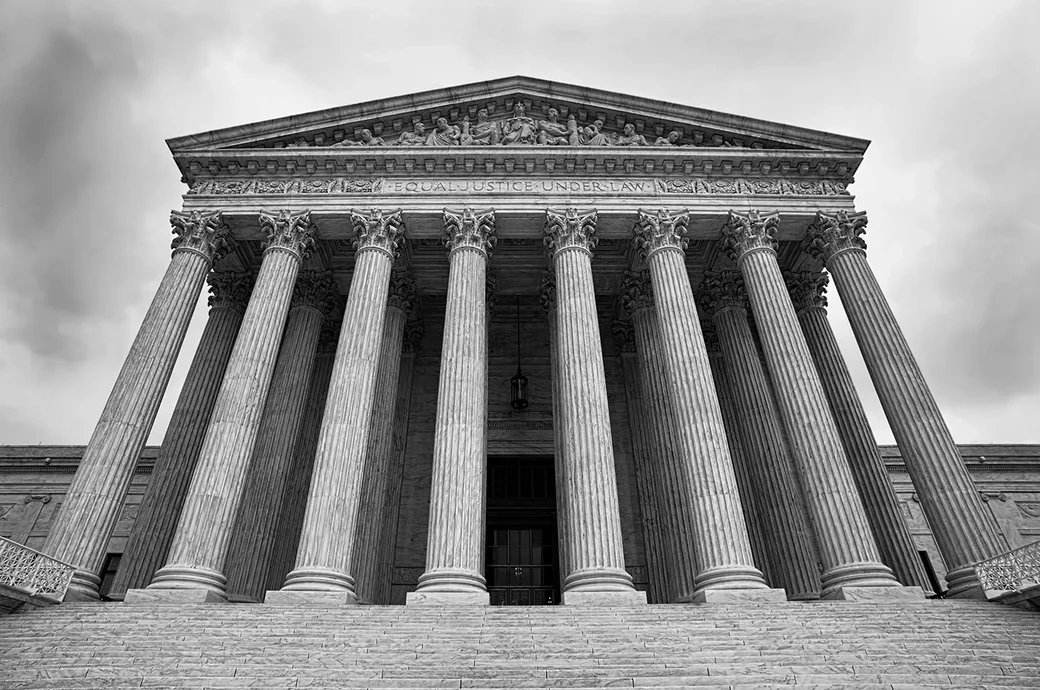
HIST 641 1A / POLSC 641 1A: The Supreme Court This course is an intensive study of the highest court in the federal judiciary, focusing on the place of the Supreme Court in the American constitutional order. Areas of study may include the relationship between the Court and the other branches of the federal government […]
HIST 643 1A / POLSC 643 1A: Federalism, the Separation of Powers, and the Constitution This course will focus on how the American judiciary as understood the Constitution’s two great institutional structures. First, it will explore the concept and practice of separation of powers into legislative, executive, and judicial branches. Second, the course will take […]
HIST 660 1A / POLSC 660 1A: The United States and the Holocaust This course will focus on the American and allied response to the Holocaust. We will also look at the rise of Adolf Hitler and his National Socialist Party, examine the ideology that fueled Nazism, as well as the creation of the institutions […]
HIST 507 1A / POLSC 507 1A: Lincoln This course provides an in-depth study of Abraham Lincoln’s political thought and action. Students will study Lincoln’s most important speeches, as well as study various aspects of his political leadership, including his role as the leader of the Republican party and as commander in chief. The course […]
HIST 642 O4B / POLSC 642 O4B: Political Parties (2) This course examines the development of American political parties, focusing on the meaning of parties and historic moments in the rise and fall of political parties from the Founding era to the present. Topics may include re-aligning elections, changing coalitions within American parties, and […]
HIST 613 O4A / POLSC 613 O4A: Postwar America, 1945-1973 (2) An examination of the United States during the three decades following the Second World War. The social, economic, political, and diplomatic development of the country is stressed with a thematic emphasis. Schedule: Monday through Thursday, 8:15-11:30 p.m. ET Materials: Syllabus Course Pack
HIST 503 2A / POLSC 503 2A: Sectionalism and Civil War A study of the sectional conflict beginning with the nullification crisis. The course will not only examine the political, social and economic developments in the period leading to the civil war, but will emphasize the political thought of Abraham Lincoln, Stephen Douglas, and John […]
HIST 506 2A / POLSC 506 2A: The Rise of Modern America, 1914-1945 With the exception of the Civil War era, it is difficult to find another thirty-year period in U.S. history during which the nation underwent such dramatic change. In 1914 the United States was no more than a regional power, with a primarily […]
HIST 632 2A / POLSC 632 2A: The American Presidency I – Washington to Lincoln This course is an examination of the political and development of the office of president from the Founding era through the Civil War. It focuses on how the presidency shaped American political life as the country grew and struggled with […]
HIST 642 2A / POLSC 642 2A: Political Parties This course examines the development of American political parties, focusing on the meaning of parties and historic moments in the rise and fall of political parties from the Founding era to the present. Topics may include re-aligning elections, changing coalitions within American parties, and the contemporary […]
HIST 643 2B / POLSC 643 2B: Administrative Power and Law This class will examine the constitutional and legal questions surrounding the emergence of the administrative state, which is the primary way that public policy is made in contemporary America. We will examine how Congress grants authority to agencies, who oversees those agencies, how those […]
HIST 502 3A / POLSC 502 3A: The American Founding This course is an intensive study of the constitutional convention, the struggle over ratification of the Constitution, and the creation of the Bill of Rights. It will include a close examination of the Federalist Papers and the antifederalist papers.
HIST 510 3A / POLSC 510 3A: Great American Texts – Democracy in America Alexis de Tocqueville’s Democracy in America is the best book on democracy and the best book on America. He recognized the justice of democratic equality but also was concerned how the passion for equality could degrade human dignity, undermine liberty, and […]
HIST 605 3A / POLSC 605 3A: The Age of Enterprise In the last decades of the 19th century, the United States took decisive steps away from its rural, agrarian past toward its industrial future, assuming its place among world powers. This course examines that movement, covering such topics as business-labor relations, political corruption, immigration, […]
HIST 608 3A / POLSC 608 3A: Civil War and Reconstruction This course will examine military aspects of the war, as well as political developments during it, including the political history of the Emancipation Proclamation, the Gettysburg Address and the Second Inaugural. The course also examines the post-war Amendments and the Reconstruction era. Instructor: Robert Colby […]
HIST 610 3A / POLSC 610 3A: American Foreign Policy Students examine events and issues in the foreign policy of the American republic. Topics include the major schools of thought and approaches, the connection between domestic and foreign politics, and the connection between the principles of the American regime and its foreign policy. Materials: Syllabus […]