Teaching American History is excited to announce the arrival of our newest CDC volume, American Foreign Policy since 1899. Edited by John Moser, this companion volume to American Foreign Policy before 1899 covers the major periods, themes, and events of the U.S.’s foreign relations in the 20th and 21st centuries.
The volume can be broken into five chronological eras.
The United States entered the 20th century riding a wave of confidence. By the end of the 1880s, it had surpassed Great Britain in steel and manufactured goods, and its per capita GDP was the highest in the world. Victory in the Spanish-American War of 1898 demonstrated its growing military reach. The United States took control of Spain’s former colonies, while Hawaii also became an American territory. These acquisitions drew the country into East Asian affairs. In 1899, Secretary of State John Hay called for an “open door” in China, arguing that American businesses should be able to compete there on equal terms with those of other powers.
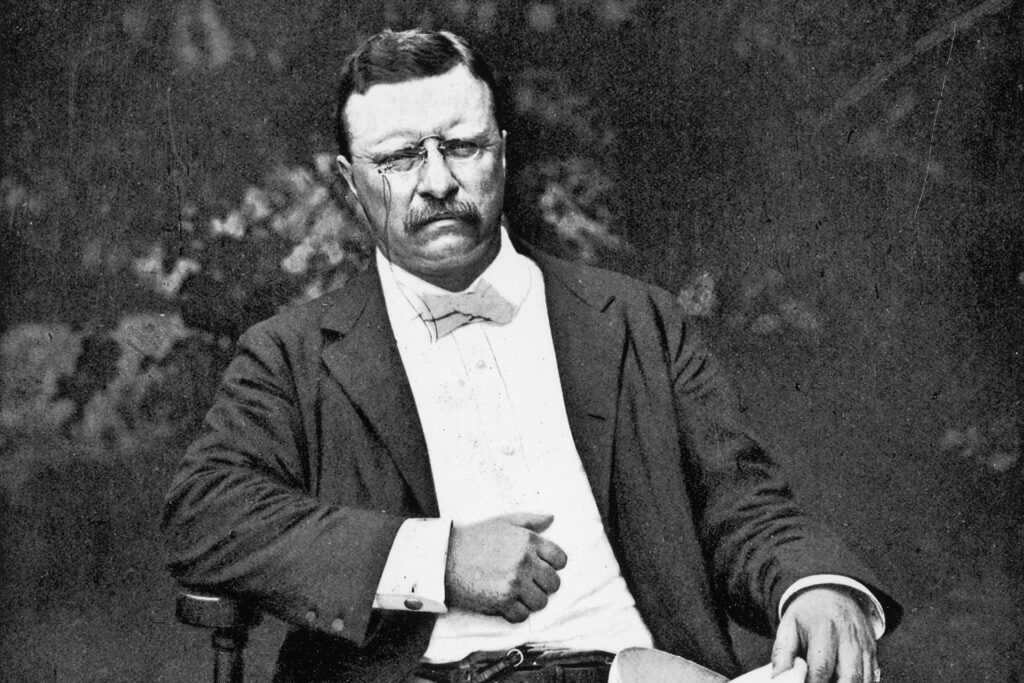
But becoming a global power brought new challenges. Filipinos resisted American rule and fought a costly guerrilla war that lasted into 1901. President Theodore Roosevelt worried that instability in Latin America might invite European intervention. His Roosevelt Corollary to the Monroe Doctrine asserted the U.S. right to intervene in the region to prevent that outcome. Roosevelt also watched Japan’s emergence as an industrial and military power with concern.
Documents include:
When war broke out in Europe in 1914, most Americans expected the United States to remain neutral. President Woodrow Wilson agreed, but neutrality raised difficult questions: Could American banks lend to countries at war? Could U.S. businesses export goods that might support the fighting? German submarine attacks on Atlantic shipping made these questions more urgent. In 1917, Germany’s return to unrestricted submarine warfare led Wilson to ask Congress for a declaration of war. He described American intervention as a fight to “make the world safe for democracy.”
After the war, Wilson pushed for a League of Nations, but senators feared membership could compromise American sovereignty or draw the country into European conflicts. The United States ultimately stayed out.
The 1920s are often called an era of isolationism, yet American goods, loans, and investments continued to shape the world economy. The Harding administration also hosted an international naval disarmament conference in 1921–22. When Japan occupied Manchuria in 1931, the United States protested but took no direct action. Secretary of State Henry Stimson announced that the U.S. would not recognize territorial changes achieved by force. Franklin Roosevelt later sought better relations with Latin America through his “Good Neighbor” policy, promising to respect the region’s independence and sovereignty.
Documents include:

By the late 1930s, aggression in Europe, Africa, and Asia made neutrality harder to maintain. President Franklin Roosevelt called for nations to work together against aggression, but public opinion limited his options. When war began in Europe in 1939, he declared U.S. neutrality while showing support for Britain and France. After France fell in 1940, he argued that a victorious Germany would threaten the United States and increased aid to the Allies.
In the Pacific, Japan’s expansion alarmed American officials. Roosevelt imposed economic sanctions, eventually cutting off trade with Japan in 1941. Negotiations failed, and Japan attacked Pearl Harbor on December 7. Germany and Italy soon declared war on the United States.
The war brought an unlikely alliance with the Soviet Union. Roosevelt believed cooperation with Joseph Stalin was essential to defeating Germany, despite the countries’ competing visions for the postwar world. At Yalta in 1945, the Allies agreed on occupation zones in Germany and Soviet promises of free elections in Eastern Europe. After Roosevelt’s death, President Harry Truman grew convinced that Stalin was violating those agreements. By the war’s end, tensions between the former allies had set the stage for the Cold War.
Documents Include:
After World War II, the United States emerged as the world’s strongest power, with conflicts in distant regions now demanding its attention.
As relations with the Soviet Union deteriorated, President Harry Truman adopted containment: allowing communism where it already existed while trying to prevent its spread. The United States supported Greece and Turkey, helped rebuild Europe through the Marshall Plan, organized the Berlin Airlift, and joined NATO. Containment proved harder in Asia. After the Communist victory in China and North Korea’s invasion of South Korea, Truman sent U.S. forces to defend the South.
President Dwight Eisenhower’s “New Look” strategy relied more heavily on nuclear deterrence, but critics questioned whether it could stop communist influence in developing countries. Vietnam became a growing test of U.S. policy. Eisenhower and John F. Kennedy increased support for South Vietnam, and Lyndon Johnson escalated the commitment into a major, increasingly unpopular war.

Richard Nixon pursued détente, easing tensions with the Soviet Union and China through diplomacy, trade, and arms control. Jimmy Carter emphasized human rights, but crises in Iran and Afghanistan weakened his presidency. Ronald Reagan took a harder line against the Soviet Union while also negotiating arms-control agreements with Mikhail Gorbachev. The Soviet Union collapsed in 1991, ending the Cold War.
Documents Include:
The end of the Cold War brought optimism about a “new world order.” After Iraq invaded Kuwait in 1990, the United States led an international coalition to liberate the country. Presidents George H. W. Bush and Bill Clinton promoted cooperation, democracy, and free trade, even hoping former rivals Russia and China might become partners.

But new threats emerged. Al-Qaeda carried out terrorist attacks around the world, while Saddam Hussein’s Iraq remained a concern. The September 11, 2001, attacks prompted President George W. Bush to declare a global “War on Terror” and send troops to Afghanistan. His administration also used the threat of future attacks to justify the 2003 invasion of Iraq. The wars in Afghanistan and Iraq became prolonged and costly. President Barack Obama reduced U.S. involvement in both while continuing the fight against terrorist groups such as ISIS.
Donald Trump challenged longstanding assumptions about American foreign policy, criticizing globalization, free trade, and military interventions in favor of an “America First” approach. Joe Biden completed the withdrawal from Afghanistan and supported Ukraine after Russia’s 2022 invasion. Trump’s return to office in 2024 renewed questions about U.S. alliances and global commitments. The country’s role as a global leader remains uncertain.
Documents Include:
Download your copy for your classroom today!